
Understanding Compound Interest
Compound interest is a powerful concept that can greatly impact your financial future. Unlike simple interest, where interest is only calculated on the initial principal amount, compound interest is calculated on both the initial principal and the accumulated interest. This means that over time, your money can grow exponentially.
To illustrate this, let’s consider an example. If you were to invest $1,000 at an annual interest rate of 5% compounded annually, after one year, you would earn $50 in interest. However, in the second year, you would earn interest not only on the initial $1,000 but also on the $50 in interest earned in the first year. This compounding effect continues to grow your money over time.
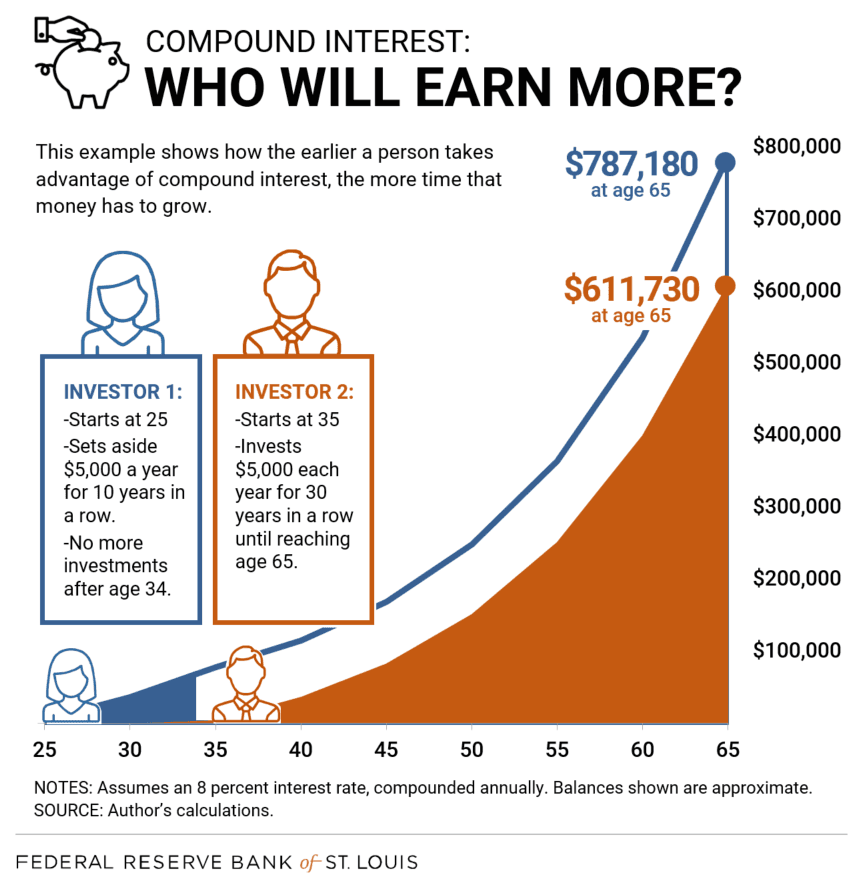
The key to maximizing the benefits of compound interest is to start investing early and to allow your money to compound over a long period of time. The longer your money has to grow, the greater the impact of compound interest.
How Compound Interest Works
To understand how compound interest works, it’s important to know the formula for calculating it. The formula for compound interest is: A = P(1 + r/n)^(nt), where A is the amount of money accumulated after n years, P is the principal amount, r is the annual interest rate, n is the number of times that interest is compounded per year, and t is the number of years the money is invested for.
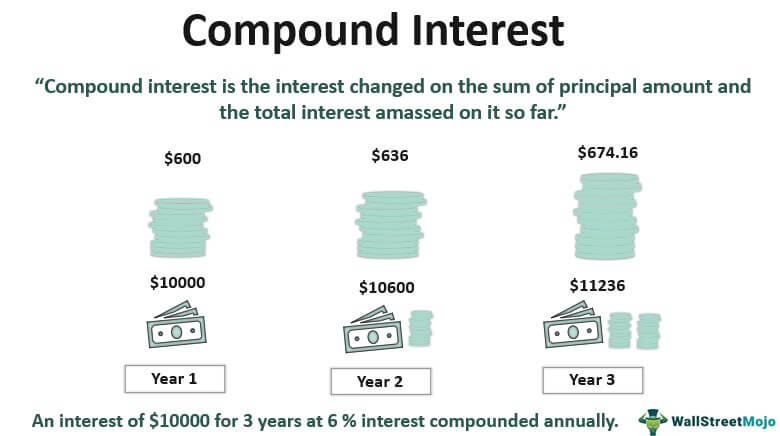
Let’s break down the formula with an example. If you were to invest $1,000 at an annual interest rate of 5% compounded quarterly for 5 years, the formula would look like this: A = $1,000(1 + 0.05/4)^(45). Calculating this would give you a total amount of $1,276.28, which means you would have earned $276.28 in interest over the 5-year period.
It’s important to note that the frequency of compounding can have a significant impact on the overall amount of interest earned. The more frequently interest is compounded, the more you will earn in the long run.
Benefits of Compound Interest
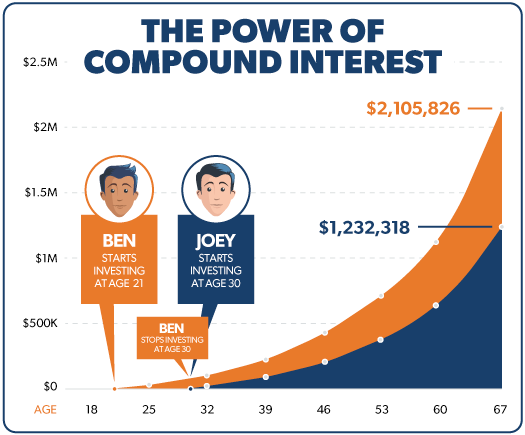
One of the main benefits of compound interest is that it allows your money to grow exponentially over time. By reinvesting the interest earned, you are essentially earning interest on your interest, which can greatly accelerate the growth of your investments.
Another benefit of compound interest is that it helps to combat the effects of inflation. Inflation erodes the purchasing power of your money over time, but by earning a return on your investments that outpaces inflation, you can ensure that your money retains its value and continues to grow.
Additionally, compound interest can help you achieve your long-term financial goals, such as saving for retirement or a major purchase. By starting to invest early and allowing your money to compound over time, you can build a substantial nest egg for the future.
Strategies for Maximizing Compound Interest
There are several strategies you can employ to maximize the benefits of compound interest. One strategy is to start investing early and regularly contribute to your investments. The earlier you start investing, the more time your money has to compound and grow.
Another strategy is to reinvest your earnings. Instead of withdrawing the interest earned, reinvest it back into your investments to take advantage of the compounding effect. This can greatly increase the overall amount of money you earn over time.
Diversifying your investments is also important for maximizing compound interest. By spreading your investments across different asset classes, you can reduce risk and potentially earn higher returns, further boosting the power of compound interest.
Common Misconceptions About Compound Interest
There are several misconceptions about compound interest that can hinder your ability to fully leverage its benefits. One common misconception is that compound interest only works for large sums of money. In reality, even small amounts invested regularly can grow significantly over time thanks to compound interest.
Another misconception is that compound interest is a quick way to get rich. While compound interest can help you build wealth over time, it requires patience and discipline to see significant results. It’s important to set realistic expectations and not expect overnight success.
Some people also mistakenly believe that compound interest is only relevant for long-term investments. While it’s true that compound interest is most effective over a long period of time, even short-term investments can benefit from compounding. The key is to start investing as early as possible and allow your money to grow.
Examples of Compound Interest in Action
To further illustrate the power of compound interest, let’s look at a few real-life examples. Suppose you were to invest $100 per month in a retirement account with an annual interest rate of 7% compounded monthly. After 30 years, you would have accumulated over $122,000, with only $36,000 of that coming from your initial investments.
Another example is investing a one-time lump sum of $10,000 in a high-yield savings account with an annual interest rate of 3%. After 10 years, your investment would have grown to over $13,400, with over $3,400 of that amount coming from compound interest.
These examples demonstrate how even small, consistent investments can grow significantly over time thanks to compound interest.
Impact of Compound Interest on Debt
While compound interest can work in your favor when it comes to investments, it can have a detrimental effect when it comes to debt. Credit card companies and lenders often charge compound interest on outstanding balances, which can quickly accumulate and make it difficult to pay off your debts.
For example, if you were to carry a credit card balance of $5,000 with an annual interest rate of 20%, compounded monthly, it would take you over 10 years to pay off the balance and you would end up paying over $10,000 in interest alone.
To avoid the negative impact of compound interest on debt, it’s important to pay off high-interest debts as quickly as possible and avoid accruing new debt whenever possible. By paying more than the minimum payment each month, you can reduce the amount of interest you pay over time and become debt-free faster.
Conclusion
Compound interest is a powerful financial concept that can greatly impact your financial future. By understanding how compound interest works and employing strategies to maximize its benefits, you can build wealth over time and achieve your long-term financial goals.
Starting to invest early, regularly contributing to your investments, and reinvesting your earnings are key strategies for maximizing compound interest. By taking advantage of the compounding effect, you can grow your money exponentially and secure your financial future.
Remember that compound interest works both ways, so it’s important to be mindful of the impact it can have on both your investments and your debts. By harnessing the power of compound interest and making informed financial decisions, you can pave the way for a secure and prosperous future.