
Roth IRA vs 401(k): Understanding the Key Differences
When it comes to saving for retirement, two popular options are Roth IRAs and 401(k) plans. Both offer tax advantages and can help individuals build a nest egg for their golden years. However, there are some key differences between the two that individuals should be aware of before making a decision.
One of the main differences between a Roth IRA and a 401(k) is how they are taxed. With a Roth IRA, contributions are made with after-tax dollars, meaning that withdrawals in retirement are tax-free. On the other hand, contributions to a traditional 401(k) are made with pre-tax dollars, but withdrawals in retirement are taxed as ordinary income. This means that individuals with a Roth IRA can potentially save on taxes in retirement, as they won’t have to pay taxes on their withdrawals.
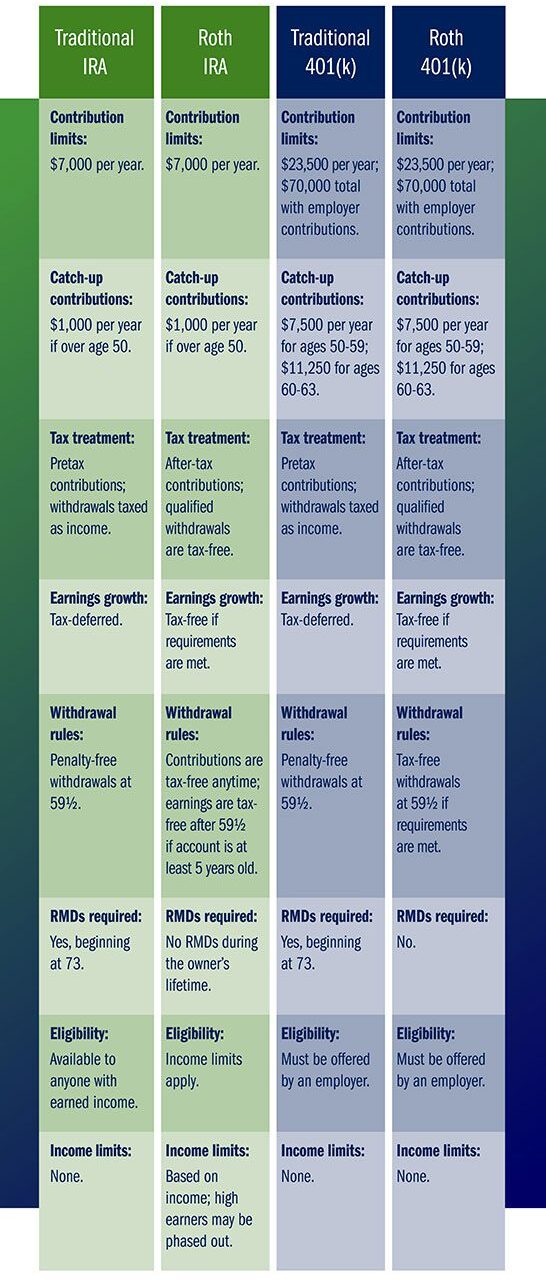
Another key difference between a Roth IRA and a 401(k) is the contribution limits. In 2021, individuals can contribute up to $6,000 to a Roth IRA, with an additional $1,000 catch-up contribution allowed for those aged 50 and over. On the other hand, the contribution limit for a 401(k) is much higher, with individuals able to contribute up to $19,500, with an additional catch-up contribution of $6,500 for those aged 50 and over. This means that individuals can potentially save more for retirement in a 401(k) than in a Roth IRA.
Additionally, a Roth IRA offers more flexibility when it comes to withdrawals. With a Roth IRA, individuals can withdraw their contributions at any time without penalty. However, withdrawals of earnings before age 59 1/2 may be subject to taxes and penalties. On the other hand, withdrawals from a 401(k) before age 59 1/2 are generally subject to a 10% early withdrawal penalty, in addition to income taxes. This means that a Roth IRA may be a better option for individuals who may need access to their funds before retirement age.
Choosing Between a Roth IRA and a 401(k): Factors to Consider
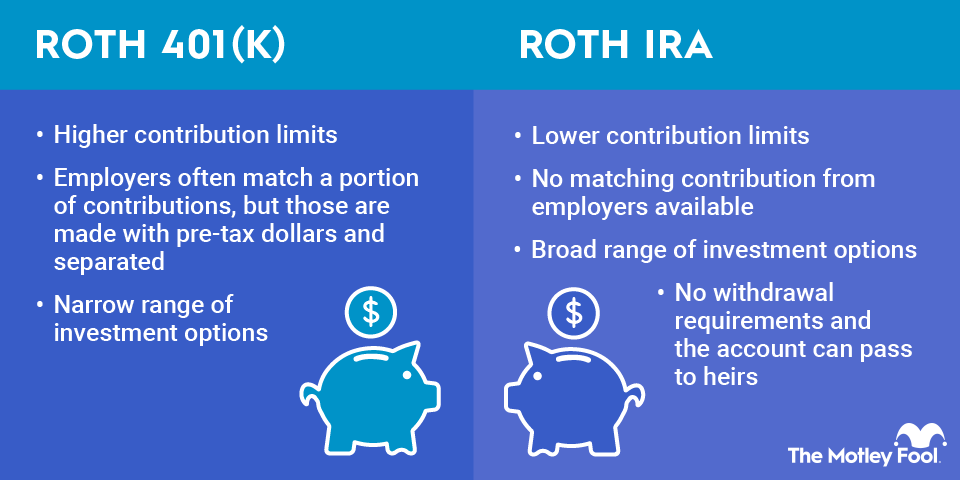
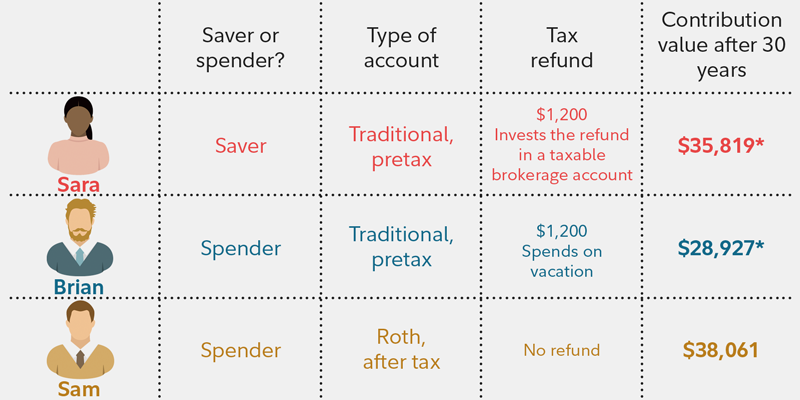
When deciding between a Roth IRA and a 401(k), there are several factors that individuals should consider. One factor to consider is the individual’s current tax bracket and expected tax bracket in retirement. If an individual is currently in a lower tax bracket than they expect to be in retirement, a Roth IRA may be a better option, as they can pay taxes on their contributions now at a lower rate. On the other hand, if an individual is currently in a higher tax bracket than they expect to be in retirement, a traditional 401(k) may be a better option, as they can defer paying taxes until retirement when they may be in a lower tax bracket.
Another factor to consider is employer matching. Many employers offer matching contributions to 401(k) plans, which can provide a significant boost to an individual’s retirement savings. If an employer offers matching contributions, it may be beneficial for an individual to contribute to a 401(k) to take advantage of the free money provided by their employer. However, individuals should also consider contributing to a Roth IRA in addition to their 401(k) to take advantage of the tax-free withdrawals in retirement.
Additionally, individuals should consider their investment options and fees when deciding between a Roth IRA and a 401(k). 401(k) plans are typically offered through employers and may have limited investment options and higher fees compared to a Roth IRA. However, some 401(k) plans offer low-cost index funds and target-date funds that can provide a diversified investment portfolio. Individuals should carefully review the investment options and fees of both a Roth IRA and a 401(k) before making a decision.
Maximizing Your Retirement Savings: Utilizing Both a Roth IRA and a 401(k)
While deciding between a Roth IRA and a 401(k) can be challenging, individuals can maximize their retirement savings by utilizing both accounts. By contributing to both a Roth IRA and a 401(k), individuals can take advantage of the tax benefits of both account types and ensure a diversified retirement portfolio.
One strategy for maximizing retirement savings is to contribute enough to a 401(k) to take advantage of any employer matching contributions, then contribute to a Roth IRA to benefit from tax-free withdrawals in retirement. Individuals can continue to contribute to both accounts each year to build a robust retirement portfolio and potentially save on taxes in retirement.
Additionally, individuals should consider converting a traditional IRA or 401(k) to a Roth IRA. By converting a traditional retirement account to a Roth IRA, individuals can pay taxes on the converted amount now and enjoy tax-free withdrawals in retirement. While there may be tax implications for converting a traditional retirement account to a Roth IRA, individuals may benefit from tax diversification and potentially save on taxes in retirement.
In conclusion, the decision between a Roth IRA and a 401(k) ultimately depends on an individual’s financial goals, tax situation, and investment preferences. By understanding the key differences between the two account types and considering factors such as tax brackets, employer matching, and investment options, individuals can make an informed decision about which account is right for them. Additionally, by utilizing both a Roth IRA and a 401(k), individuals can maximize their retirement savings and build a secure financial future.