
Solo 401k vs SEP IRA: Understanding the Key Differences
When it comes to retirement savings options for self-employed individuals, two popular choices are the Solo 401k and the SEP IRA. Both plans offer tax advantages and flexibility, but there are some key differences to consider when deciding which one is right for you.
Contribution Limits
One of the biggest differences between a Solo 401k and a SEP IRA is the contribution limits. With a Solo 401k, you can contribute up to $19,500 as an employee, plus an additional $6,500 if you are age 50 or older. As an employer, you can also make profit-sharing contributions of up to 25% of your net self-employment income. In total, the maximum contribution limit for a Solo 401k in 2021 is $58,000 (or $64,500 for those age 50 or older).

On the other hand, with a SEP IRA, the contribution limit is much simpler. You can contribute up to 25% of your net self-employment income, up to a maximum of $58,000 in 2021. This means that if you have a lower income, you may be able to contribute more to a SEP IRA compared to a Solo 401k.
In general, if you have a higher income and want to maximize your retirement savings, a Solo 401k may be the better option. However, if you have a lower income and want a simpler contribution structure, a SEP IRA may be more suitable.
Employer Contributions
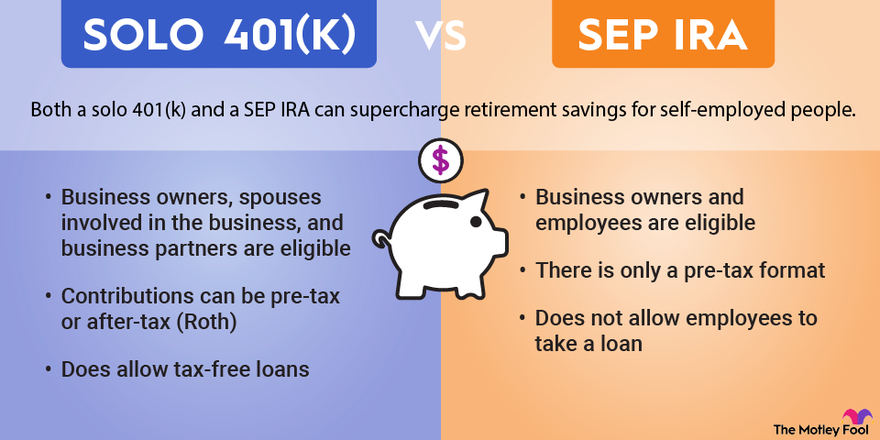
Another key difference between a Solo 401k and a SEP IRA is how employer contributions are made. With a Solo 401k, you have the option to make both employee and employer contributions, giving you more control over your retirement savings. You can choose to make profit-sharing contributions based on your business’s performance each year, allowing you to adjust your contributions as needed.
On the other hand, with a SEP IRA, employer contributions are mandatory and must be made at the same percentage of compensation for all eligible employees, including yourself. This means that if you have employees, you will be required to make contributions on their behalf as well, which may not be ideal if you want to maximize your own retirement savings.
In general, if you want more flexibility and control over your retirement savings, a Solo 401k may be the better option. However, if you have employees and want a simpler contribution structure, a SEP IRA may be more suitable.
Loan Options
One advantage of a Solo 401k over a SEP IRA is the ability to take out a loan from your retirement savings. With a Solo 401k, you can borrow up to $50,000 or 50% of your account balance, whichever is less, for any reason without penalty. This can be useful if you need access to funds for a major purchase or unexpected expense.
On the other hand, with a SEP IRA, there is no option to take out a loan. Once you make a contribution to a SEP IRA, the funds are locked in until retirement age, unless you are willing to pay early withdrawal penalties and taxes.
In general, if you anticipate needing to access your retirement savings before retirement age, a Solo 401k may be the better option. However, if you do not anticipate needing to take out a loan, a SEP IRA may be more suitable.
Conclusion
In conclusion, both the Solo 401k and the SEP IRA are excellent retirement savings options for self-employed individuals. The best choice for you will depend on your individual financial situation and retirement goals. If you have a higher income and want more control over your retirement savings, a Solo 401k may be the better option. On the other hand, if you have a lower income and want a simpler contribution structure, a SEP IRA may be more suitable. It is important to carefully consider the key differences between these two plans and consult with a financial advisor before making a decision.