
Introduction
Exchange-traded funds (ETFs) and mutual funds are both popular investment options for individuals looking to diversify their portfolios. While both options offer investors exposure to a wide range of assets, there are key differences between the two that investors should consider before making a decision. In this article, we will explore the differences between ETFs and mutual funds and help you understand which option may be best for your investment goals.
Cost
One of the main differences between ETFs and mutual funds is the cost associated with each option. ETFs typically have lower expense ratios compared to mutual funds, making them a more cost-effective option for investors. Additionally, ETFs do not have sales loads or redemption fees, which can add up over time with mutual funds. This cost advantage of ETFs can result in higher returns for investors over the long term.
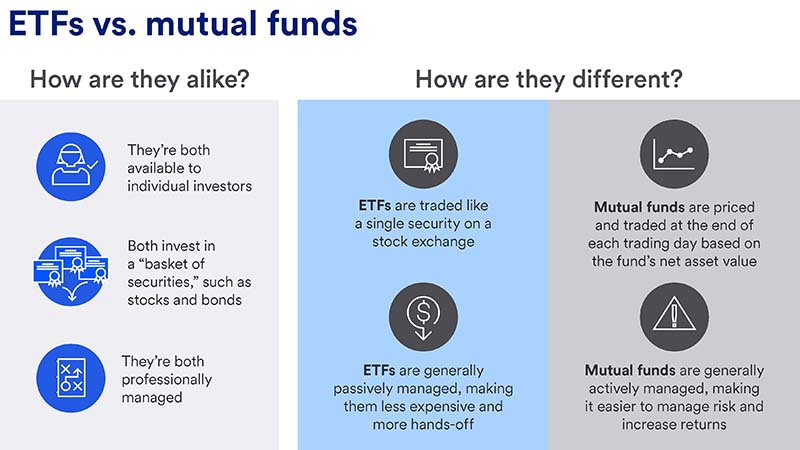
On the other hand, mutual funds often come with higher expense ratios, which can eat into an investor’s overall returns. Additionally, many mutual funds charge sales loads and redemption fees, which can further reduce an investor’s profits. In this sense, ETFs are generally a more cost-effective option for investors looking to minimize expenses.
Trading Flexibility
Another key difference between ETFs and mutual funds is the level of trading flexibility each option offers. ETFs trade on an exchange throughout the day, allowing investors to buy and sell shares at any time during market hours. This real-time trading flexibility can be advantageous for investors looking to capitalize on short-term market movements or adjust their portfolios quickly.
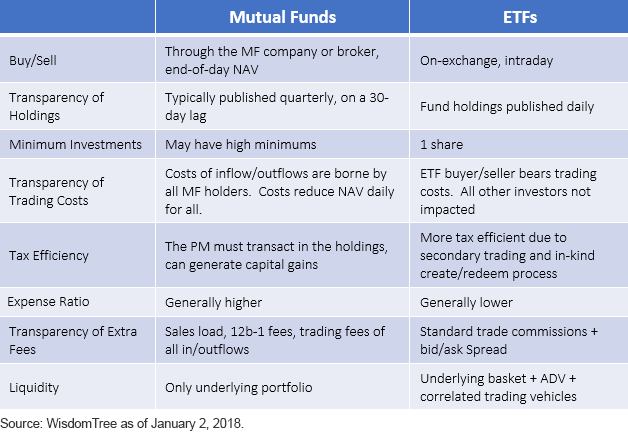
Mutual funds, on the other hand, only trade once per day after the market closes. This lack of intraday trading can limit an investor’s ability to react quickly to market events or make changes to their portfolios on short notice. For investors who value trading flexibility and the ability to execute trades quickly, ETFs may be the preferred option.
Portfolio Transparency
ETFs and mutual funds also differ in terms of portfolio transparency. ETFs disclose their holdings on a daily basis, allowing investors to see exactly what assets they are invested in at any given time. This level of transparency can be beneficial for investors who want to know exactly what they are investing in and understand the risks associated with their holdings.
Mutual funds, on the other hand, typically only disclose their holdings on a quarterly basis. This lack of real-time transparency can make it difficult for investors to know exactly what assets they are invested in at any given time. For investors who value portfolio transparency and want to have a clear understanding of their investments, ETFs may be the preferred option.
Tax Efficiency
ETFs and mutual funds also differ in terms of tax efficiency. ETFs are structured in a way that allows investors to minimize capital gains distributions, which can result in lower tax liabilities for investors. This tax efficiency can be advantageous for investors looking to minimize their tax exposure and maximize their after-tax returns.
Mutual funds, on the other hand, are required to distribute capital gains to shareholders, which can result in tax liabilities for investors. These capital gains distributions can be particularly problematic for investors in taxable accounts, as they may be required to pay taxes on gains even if they did not sell any shares. For investors who prioritize tax efficiency and want to minimize their tax exposure, ETFs may be the preferred option.
Investment Minimums
ETFs and mutual funds also differ in terms of investment minimums. ETFs typically do not have minimum investment requirements, allowing investors to purchase shares in any quantity they desire. This flexibility can be advantageous for investors who want to start investing with a small amount of capital or make incremental contributions over time.
Mutual funds, on the other hand, often have minimum investment requirements, which can be a barrier for some investors. These minimums can vary depending on the fund and can range from a few hundred dollars to several thousand dollars. For investors who are looking to start investing with a small amount of capital or make incremental contributions, ETFs may be the preferred option.
Performance
When comparing the performance of ETFs and mutual funds, it is important to consider a variety of factors, including expense ratios, tracking error, and fund manager expertise. ETFs typically have lower expense ratios compared to mutual funds, which can result in higher returns for investors over the long term. Additionally, ETFs are designed to track specific indexes or sectors, which can help investors achieve their investment goals with greater precision.
Mutual funds, on the other hand, are actively managed by professional fund managers who seek to outperform the market. While this active management can potentially generate higher returns for investors, it can also come with higher fees and the risk of underperformance. For investors who prioritize performance and want to achieve market-beating returns, mutual funds may be the preferred option.
Conclusion
In conclusion, ETFs and mutual funds are both popular investment options that offer investors exposure to a wide range of assets. While both options have their own advantages and disadvantages, investors should carefully consider their investment goals, risk tolerance, and time horizon before choosing between ETFs and mutual funds. ETFs may be a more cost-effective and tax-efficient option for investors looking to minimize expenses and maximize after-tax returns. On the other hand, mutual funds may be a preferred option for investors who value active management and the potential for market-beating returns. Ultimately, the decision between ETFs and mutual funds will depend on a variety of factors that are unique to each individual investor.